
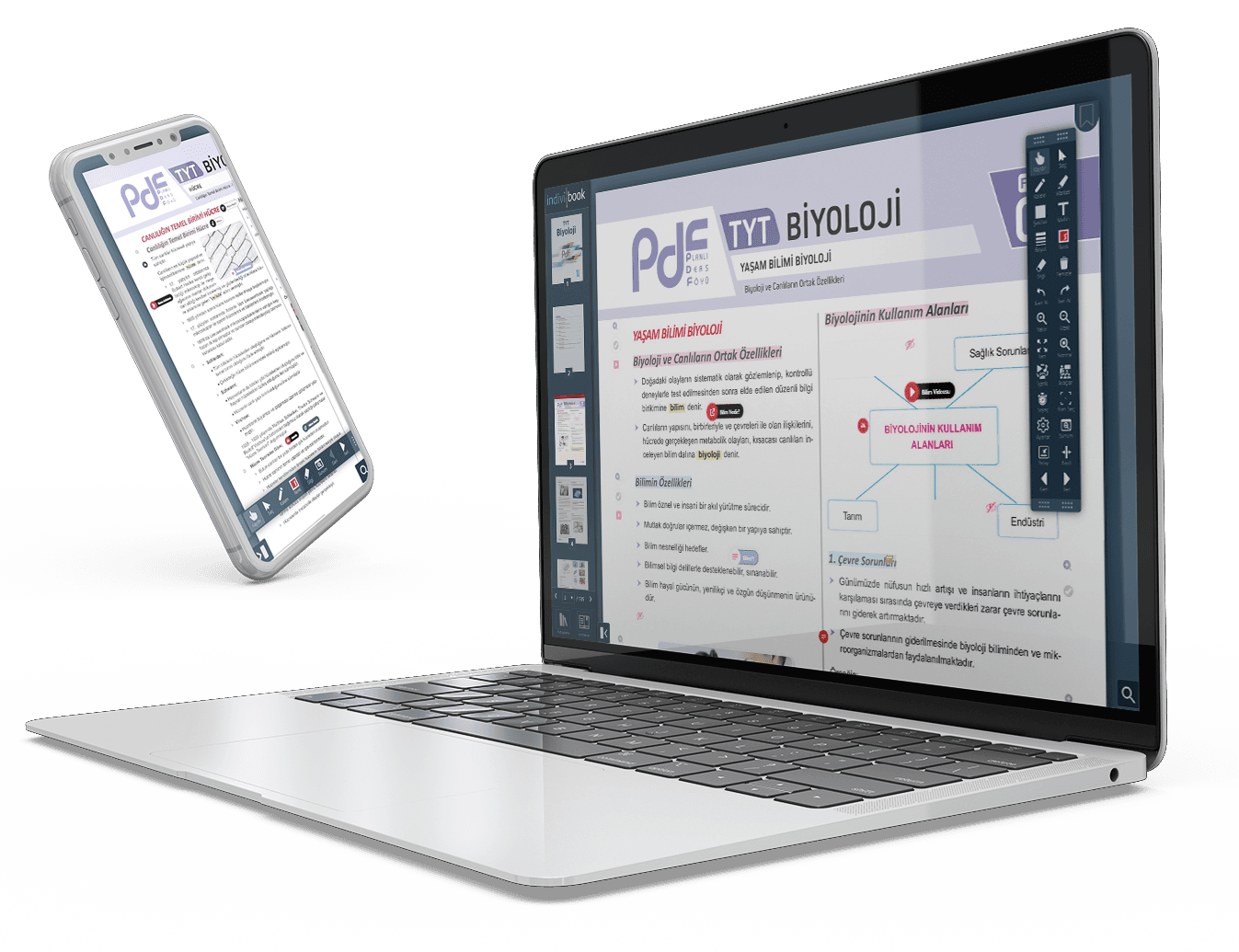
What Is a z-Book?
A z-Book is more than a PDF of a print textbook. Its layered structure supports different learning styles, teacher guidance and closer tracking of student progress.
A z-Book is created by digitising print textbooks, yet it is far more than a PDF file. Thanks to its layered structure, it speaks to students’ different learning styles, supports teachers’ guidance, and allows school administrations to follow student achievement more closely.
A z-Book (Enriched Book) is the digital version of a print textbook; but there are important differences that set it apart from an ordinary digital book file:
- Interactive content (video, audio, simulation, images)
- Instant test-taking and assessment
- The ability to take notes and highlight
- A structure open to guidance between teacher and student
It enables a student to learn not only by reading but by watching, listening and working through solutions. That means a structure that supports multiple learning styles.
Why Is a z-Book Necessary?
The role of technology in education is not merely instrumental. Well-designed digital solutions change the nature of learning. A z-Book is one of the core tools that make that change possible. Because learning happens not only when knowledge is presented, but when that knowledge finds a response in the student. Interactive z-Book models are enriched with dynamic elements that strengthen this response.
With a z-Book, students do not merely skim the learning material; they interpret it, reinforce it through practice and, when needed, revise at their own pace. The learning process thus ceases to be passive and is strengthened by the student’s active participation. This is a major advantage, especially in crowded classrooms or in remote learning settings.
Advantages of a z-Book in Education
Learning Independent of Time and Place
z-Books let students reach lesson material from anywhere. Studying from a tablet, computer or smart board is now much freer.
Active Participation and Motivation
Interactive elements catch the student’s attention and increase participation in learning. As a result, students engage with the material for longer and more effectively.
Easy Tracking and Guidance for the Teacher
z-Book systems usually come with a teacher panel. Through this panel the teacher can see how far the student has progressed, identify gaps and give individual guidance.
Instant Feedback
Thanks to the tests inside a z-Book, students can see at once how well they have understood the topic. That makes the learning process dynamic and personal.
What a z-Book Makes Possible in Education
A z-Book does not only make learning easier; it also personalises it. That personalisation lets every student reach the topic they need at their own pace. Text, images, video, audio files and tests inside a z-Book make the learning process multidimensional. They also speed up access to knowledge and make learning independent of time and place.
They also offer important possibilities for teachers. A teacher can easily see how far the students in the class have progressed, which topics they find difficult and which sections need more revision. z-Book systems give digital support to the teacher’s classroom management and guidance. In classroom practice, the digital content a z-Book provides also makes the lesson both more engaging and more productive.
How Do They Differ from Traditional Books?
A z-Book has a much more versatile structure than a classic book. First of all, it is dynamic rather than static. Content can be updated, developed and diversified over time. In a print book, a page error or omission can only be corrected with a new edition; in a z-Book such improvements can be made instantly. That is a major advantage for keeping content current.
A z-Book also increases portability. Students can reach all their lesson materials from a single device. The physical weight of books disappears. That is an ergonomic improvement, especially for primary and secondary students.
A data-based approach should not be overlooked either. z-Book systems can analyse which content a student completed and how long it took, how many questions they got right on a given test, and how much revision is needed. These data are an important guide not only for the student but also for the teacher and school administration.
The Role of the z-Book in Education Is Growing Stronger
When digital education became a necessity during the pandemic, the importance of solutions such as the z-Book became clear. These technologies, however, are not only for times of crisis; they also form an unavoidable foundation for the education models of the future. More and more schools and teachers are using z-Books to vary their lessons, increase student participation and reach more objective data on learning productivity.
z-Book platforms that work with AI-supported systems in particular can analyse the topics a student is missing and recommend personalised content based on that analysis. That allows learning to become more automatic and personal, rather than depending solely on teacher follow-up.
Who Is a z-Book Suitable For?
- Students: content supported by visual and audio materials makes learning more lasting.
- Teachers: they can increase in-class interaction and involve the student actively in the process.
- Parents: they can follow more easily what their child is studying and how far they have progressed.
- Schools: they can build a more sustainable, modern education model through digital transformation.
A z-Book is not merely a digital step in education; it is a revolution that redefines learning. While it personalises students’ learning, it also makes guidance much easier for teachers. For every institution that wants to use technology effectively in education, getting to know this powerful tool and integrating it into its system is no longer an option but a necessity.
A z-Book experience that works in class
Enrich your content with video, audio, interaction and AI, then publish it on Windows, Pardus, iOS and Android from a single setup.