
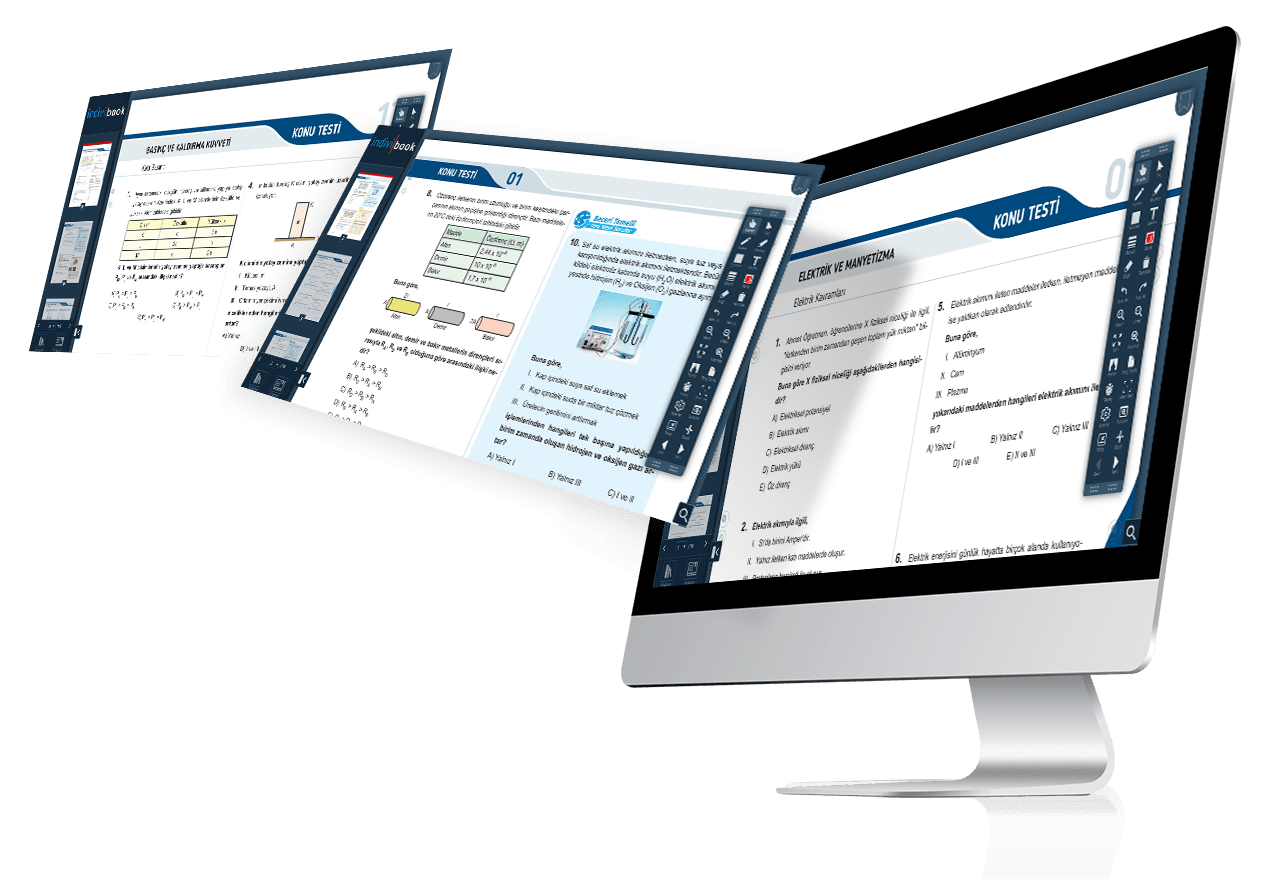
Interactive and Personalised Learning with a z-Book
Students and teachers are turning to z-Books instead of classic textbooks, looking for more interaction, better tracking and clearer learning outcomes.
Both students and teachers have started using z-Books in place of classic textbooks in a digitalising world of education. Reading, underlining or turning a page is no longer enough. Students expect more interaction, teachers more trackability, and parents more visible learning outcomes. At this point, indiviBook z-Book technology supports its users.
So what is a z-Book? Is it merely the digital form of a PDF? No, it is much more than that.
What Is a z-Book?
A z-Book means “enriched book”. In other words, it is not only a digital book of text and images; it is a digital learning material supported by interactive content, videos, animations, audio files, tests and assessment tools.
The aim is not only that a student reads the topic, but that they understand it, interact with it and reinforce the knowledge. Educational materials are not merely delivered; learning is supported through active participation.
Why a z-Book? How Does It Differ from a Digital Book?
Many people may think of a z-Book as a PDF file. An indiviBook z-Book, however, goes well beyond static content. Here are the main differences that set a z-Book apart from a digital book:
- Interactive Elements: tests that can be solved on the page, areas where notes can be taken, interactive homework.
- Supporting Media: video explanations, topic summaries, audio instructions and animations.
- Assessment Tools: progress tracking with data such as how long a student spent on which page and how many times they attempted a question.
- Personalisation: recommended content and study plans based on the topics the student is missing.
How Does a z-Book Help the Student?
- Learning at Their Own Pace: students can learn any topic at the speed they choose. They can watch the points they missed in videos and listen to worked examples again and again.
- More Sensory Input: content supported by visual and audio elements is a major advantage, especially for students with different learning styles.
- A Motivating Experience: gamification elements such as instant tests at the start of a page, solution videos and achievement badges help keep students motivated.
- Accessibility: z-Books can be used from any device with internet access. Students can therefore reach education without limits of time or place.
A z-Book for Teachers: Tracking, Reporting and Support:
A z-Book is a great help not only for the student but also for the teacher. Student participation, success rates and the learning process can be followed digitally. With data such as which student is struggling with which topic, and who completed which activities when, the teacher can run classroom management in a data-based way.
Teachers can also add notes for individual students on the z-Book, direct extra exercises or make announcements to the class.
Points to Watch When Using a z-Book
For a productive learning process with a z-Book, the following points should be kept in mind:
- A regular usage habit should be built. Study should follow a programme, not happen at random.
- Device time should stay balanced. Although z-Books support learning, they should not turn into screen dependence.
- Activities should not be skipped before they are completed. z-Books are generally designed around sequential learning.
The Future with a z-Book: Not Just a Book, but a Learning Platform:
In the future, z-Books will become not only lesson materials but digital guides through which students can map their learning, see their weak points and be directed by artificial intelligence.
The indiviBook z-Book infrastructure is one of the important steps in this transformation. z-Books developed in line with the MEB curriculum do more than explain the topic; they follow the student’s development, identify their needs and suggest solutions.
A New Standard in Education
A z-Book is not only one piece of digital transformation; it is on the way to becoming a lasting standard in education. Representing a student-centred, measurable and personalisable approach, this system is building the learning culture of the future today.
For every educator, parent and student who wants to go beyond classic books, a z-Book is no longer an option but a need.
A z-Book experience that works in class
Enrich your content with video, audio, interaction and AI, then publish it on Windows, Pardus, iOS and Android from a single setup.